This $399 Robot Duck Is Teaching Us How AI Learns to Move
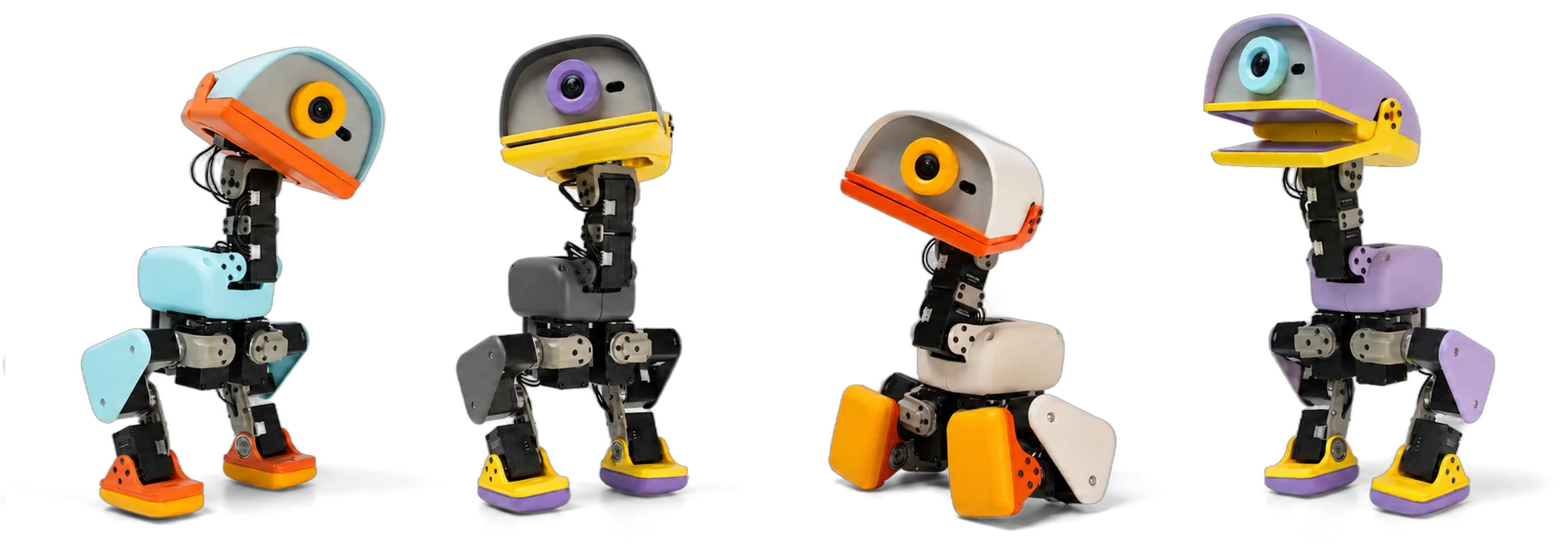
Meet Microduck, the 25 cm open-source robot from Hugging Face and Pollen Robotics. Price, specs, how it learns with reinforcement learning, and why it matters.
A robot you can hold in one hand, shaped like a duck, priced at $399. It sounds like a toy, but Microduck is getting serious attention from AI developers, and the reason has little to do with how cute it looks. It is a low-cost way to learn how AI actually teaches a machine to move.
This guide covers what Microduck is, what it can do, how it learns, and what it means for students and AI builders.
What Is Microduck?
Microduck is a small two-legged robot from Pollen Robotics, the French robotics company that Hugging Face bought in 2025. It stands about 25 cm tall and weighs under 800 g. Pollen built it for developers, students and hobbyists who want to experiment with physical AI without buying expensive lab equipment.
Pollen's earlier product, Reachy Mini, was designed around interaction with people. Microduck focuses on movement and action. It can make beeps and play tunes, but it is not built for conversation.
Microduck Specs and Price at a Glance
- Price: $399 before taxes and shipping (roughly ₹35,000 or more once conversion, import duty and delivery are added)
- Height: around 25 cm
- Weight: under 800 g
- Motors: 15
- Sensors: camera, depth sensor and two motion sensors (IMUs)
- Extras: microphone, speaker and an articulated beak that works as a gripper
- Processor: Rockchip RK3566
- Colours: Sky, Graphite, Cream and Lavender
What Can Microduck Do?
The robot can walk, crouch, stand back up after common falls and pick up light objects with its beak. Pollen has also shown it roller-skating, which tells you something about how much balance control the platform can handle for its size.
It is not a household helper, and Pollen does not pitch it as one. Think of it as a hands-on lab for learning how robots work.
How Microduck Learns New Skills
The interesting part is the training workflow. Teaching a physical robot by trial and error on real hardware is slow, and a bad experiment can break the machine. The approach behind Microduck moves most of that work into software.
- Build a digital twin. Developers create a virtual copy of the robot in a physics simulator. A Microduck simulator is hosted on Hugging Face, so you can experiment before the hardware arrives.
- Train with reinforcement learning. The simulated robot tries thousands of movements, falls, adjusts and tries again. Behaviours that score better are reinforced, so the control policy improves with each round.
- Use AI agents to manage the pipeline. In NVIDIA's demonstration, AI agents helped set up the simulation and coordinate the training tools. The AI is not just answering a question here. It is helping produce a physical capability.
- Transfer to the real robot. The trained policy is loaded onto the physical Microduck. This step is known as sim-to-real transfer.
Simulation is never a perfect copy of reality. Friction, motor wear and uneven floors all behave differently in the real world, so every policy still needs testing on the actual robot.
Is Microduck Open Source?
Partly. Pollen and Hugging Face describe the software side as open source, and the idea is that people can share robot behaviours much like they share AI models on the Hugging Face Hub. However, Pollen has asked the press not to call the robot "open-source hardware" for now, because the mechanical design files have not been confirmed as released. If open hardware matters for your project, check the official page before buying.
Availability: Can You Buy It in India?
Microduck is currently on pre-order, with sales limited to North America and Europe, and first deliveries targeted before Christmas 2026. That means Indian buyers cannot order it directly through the official shop for now. Some social posts have quoted a wait of four to six months, which is broadly in line with a year-end delivery target, but check the latest estimate on Pollen's site before planning around it.
Why Microduck Matters Beyond the Robot
The timing adds context. Reports say NVIDIA has agreed to acquire Hugging Face, and the deal is still described as pending. If it goes through, NVIDIA would gain one of the largest AI developer communities along with a small hardware business that already ships affordable robots. NVIDIA's CEO has said developers will remain free to choose their own models, frameworks and hardware, and Microduck itself runs on a Rockchip chip rather than NVIDIA silicon.
For learners, the bigger lesson is that AI is no longer only about chatbots and image generators. The pieces now fit together: agents that plan tasks, simulators that generate practice data, reinforcement learning that improves behaviour, and cheap hardware that tests the result.
What Students and Freshers Can Do Now
You do not need a robot to start learning this stack.
- Get comfortable with Python.
- Learn the basics of machine learning and reinforcement learning.
- Study computer vision, since cameras are how robots see.
- Try AI agents and tool calling to understand how software workflows are automated.
- Open the Microduck simulator or another physics simulator and run a small experiment.
A single working mini-project will teach you more than hours of passive tutorials, and it makes a stronger portfolio entry too.
Microduck will not solve robotics, and its makers say as much. What it does is lower the cost of entry to physical AI. If affordable robots follow the path that cloud AI took, today's $399 experiment could be the starting point for a wave of student projects and open behaviour libraries.
Which arrives first: AI agents as reliable digital co-workers, or affordable robots as useful everyday helpers? Tell us in the comments.
More for your curious side.
Google Gemini 4 Carbon: New AI Model Leads Across Coding, Cybersecurity and Long-Context Benchmarks
Google Gemini 4 Carbon: New AI Model Leads Across Coding, Cybersecurity and Long-Context Benchmarks Google Gemini 4 Carbon is making headlines in the…

Microsoft’s Biggest Exit Offer Ever: 60,000 Employees, Including India
Microsoft has introduced a Voluntary Exit Offer (VEO) that could cover approximately 60,000 employees across the United States, India, the United Kingdom and…

Freshers Read This: IIT Madras Study Says AI Could Shrink Your First Job Options
Every year, lakhs of students in India finish college with one hope: a first job that lets them learn, grow and move up.…