AI Is Moving Too Fast: What Should Freshers Actually Learn in 2026?

Every day, there is a new concept, a new tool, or a new career opportunity emerging in Artificial Intelligence.
Yesterday, everyone was talking about AI Agents. Today, the conversation is about Forward Deployed Engineers (FDEs), Harness Engineering, Reverse Engineering, RAG, Agentic AI, and many other emerging concepts.
For students and freshers, it can feel overwhelming.
They open LinkedIn and see someone talking about AI Agents. They watch YouTube and discover a new AI coding tool. Then they see a job description asking for RAG, LLMs, AI workflows, and agent development.
Suddenly, they start questioning their preparation.
Am I learning the right skills? Should I learn FDE? Is RAG still relevant? Do I need to master every AI tool? What if another technology becomes popular tomorrow?
If you are a fresher experiencing this confusion, this blog is for you.
## 1. The biggest mistake freshers are making
Many students have started treating every new AI concept as a separate subject they must master.
A new tool launches, and they start learning it.
A new engineering role becomes popular, and they change their career plans.
A new framework trends on LinkedIn, and they abandon what they were learning last week.
This creates a continuous cycle of learning without direction.
The problem is not that you are learning too little. The problem is that you might be learning without a clear roadmap.
You do not need to learn everything happening in AI. You need to learn the right things in the right order.
## 2. Understand the difference between AI concepts, tools, and job roles
Before deciding what to learn, understand that not every trending term represents the same kind of skill.
Here are some examples.
### AI Agents
AI agents use AI models, tools, and workflows to perform tasks with varying levels of autonomy. For example, an agent could research a topic, retrieve information, and prepare a report.
### RAG (Retrieval-Augmented Generation)
RAG allows an AI application to retrieve relevant information from external sources before generating an answer. Imagine building a chatbot that answers questions using your company's documents.
### FDE (Forward Deployed Engineer)
An FDE works closely with customers to understand real business problems and implement technical solutions. Depending on the company, the role may involve software engineering, AI integration, deployment, and customer collaboration.
### Harness Engineering
Harness engineering focuses on the systems, tools, instructions, constraints, and evaluation processes that help AI coding agents work reliably.
### Reverse Engineering
Reverse engineering involves examining an existing system or product to understand how it works. It can help engineers investigate software behaviour, troubleshoot problems, and understand unfamiliar systems.
These concepts are connected, but they are not interchangeable.
Some describe technical approaches, some describe engineering practices, and others describe career roles.
You should understand their purpose before deciding how deeply to study them.
## 3. What should freshers learn first?
Instead of chasing every new trend, follow a structured learning path.
### Stage 1: Build your technical foundation
Start with the fundamentals that help you build and understand software.
Focus on:
- One programming language, such as Python or JavaScript.
- Programming fundamentals and problem-solving.
- APIs and backend basics.
- Databases and SQL.
- Git and GitHub.
- Basic data structures and algorithms.
- Debugging, testing, and software development principles.
You do not need to become an expert in every area before exploring AI. However, a strong foundation will help you understand what your AI applications are actually doing.
### Stage 2: Understand Generative AI
Once you are comfortable with programming basics, learn how modern AI applications work.
Focus on:
- Large Language Models (LLMs).
- Prompt engineering and structured outputs.
- Model APIs and context windows.
- Embeddings and vector search.
- RAG systems.
- Function calling and tool use.
- AI agents and workflows.
- AI evaluation, security, and limitations.
Do not just memorise definitions. Understand the problem each concept solves.
For example, do not learn RAG simply because it appears in job descriptions. Build an application that uses RAG and understand how retrieval quality affects its answers.
### Stage 3: Build projects that solve real problems
This is where learning becomes practical.
Instead of building ten basic chatbots, build two or three meaningful projects that demonstrate your engineering skills.
Here are some ideas:
**Project 1: AI Knowledge Assistant**
Build an application that answers questions from uploaded documents using RAG and provides relevant source references.
**Project 2: AI Customer Support Agent**
Build an agent that understands customer queries, retrieves relevant information, and uses tools to perform appropriate actions.
**Project 3: AI Business Automation System**
Build a workflow that takes a real business problem, processes information, calls APIs, and produces a useful result with appropriate checks.
For every project, try to understand the architecture, test its limitations, handle errors, and deploy it.
A project you can explain, debug, and improve is more valuable than a project you have merely copied from a tutorial.
### Stage 4: Choose a career direction
Once you have the basics and some practical experience, explore the role that matches your interests.
For example:
- AI Engineer: Build and integrate AI-powered applications.
- ML Engineer: Develop, train, evaluate, and deploy machine learning systems.
- Agent Engineer: Develop systems that use AI models, tools, and multi-step workflows.
- Forward Deployed Engineer: Work with customers to implement technical solutions to real business problems.
- AI Platform Engineer: Build and maintain the infrastructure that supports AI applications and teams.
These roles can overlap, and their requirements vary by employer.
You do not need to commit to one role on day one. Explore, build, and use your experience to decide where to specialise.
## 4. Do freshers need to learn every new AI tool?
Absolutely not.
AI tools are changing quickly. Learning how to use one particular tool is useful, but understanding the underlying engineering principles is more transferable.
Suppose you know how to build an AI application using one framework.
If you understand model APIs, tool calling, retrieval, testing, and deployment, you will have a better starting point when you encounter another framework.
The same applies to AI coding tools.
You can use AI to accelerate development, but you should still understand the code being generated, review its output, test the application, and identify security or reliability issues.
Learn concepts deeply. Learn tools as needed. Build skills that transfer.
## 5. A practical 30-day roadmap for freshers
You do not need to master the entire AI ecosystem in one month. Use the next 30 days to establish a direction and build something tangible.
| Timeline | Focus | Expected outcome |
|---|---|---|
| Days 1–7 | Programming, APIs, Git, and software fundamentals | Understand the basics needed to build applications |
| Days 8–14 | LLMs, prompting, embeddings, and RAG | Build a simple AI application |
| Days 15–21 | AI agents, tool calling, and workflows | Add useful capabilities to your application |
| Days 22–30 | Testing, debugging, deployment, and documentation | Publish a working project and explain your decisions |
Adjust the pace according to your existing knowledge. If you are completely new to programming, spend more time on the foundations before moving ahead.
At the end of these 30 days, review your progress.
Can you explain what you built? Can you identify its limitations? Can you debug it when something goes wrong? Can you explain why you chose a particular approach?
These are much better indicators of progress than the number of AI tools you have tried.
## 6. What about new roles like FDE and Harness Engineer?
Pay attention to emerging roles, but do not panic every time a new title becomes popular.
If FDE interests you, study software engineering, AI integration, system design, customer problem-solving, and production deployment.
If Harness Engineering interests you, explore AI coding agents, development workflows, automated testing, evaluation, and reliability.
If AI agent development interests you, start with LLMs, APIs, tool calling, and workflow design.
Notice the pattern: different roles require different specialisations, but they share many underlying skills.
Build your foundation first. Then learn the additional skills needed for the role you want.
## 7. How should you decide whether a new AI trend is worth learning?
Before investing several days in a new concept, ask yourself five questions:
1. What problem does this concept solve?
2. Is it relevant to the career I want?
3. Does it build on something I already understand?
4. Can I apply it to a real project?
5. Are employers or real-world applications requiring it?
If the concept is relevant, experiment with it. If it is unrelated to your immediate goals, save it for later.
You can stay curious without changing your roadmap every week.
## Final thoughts: Stop chasing everything. Start building something.
The AI industry will continue to evolve. New tools, frameworks, engineering practices, and job titles will keep emerging.
There is no final checklist of AI knowledge that you can complete forever.
And that is okay.
Your goal as a fresher is not to know every new term before everyone else. Your goal is to develop the ability to understand new technology, apply it, and solve meaningful problems.
Learn the fundamentals. Understand AI concepts. Build real projects. Explore career paths. Keep improving.
Most importantly, do not compare your beginning with someone else's years of experience.
**You do not need to learn all of AI. You need a clear direction, consistent practice, and the ability to build things that work.**
At Common Jobs AI University, our focus is to help students move beyond simply consuming tutorials and start developing practical AI skills through structured learning and hands-on building.
The future will bring more AI concepts. Do not let every new concept distract you from building your future.
Learn with direction. Build with purpose. Grow with AI.
More for your curious side.
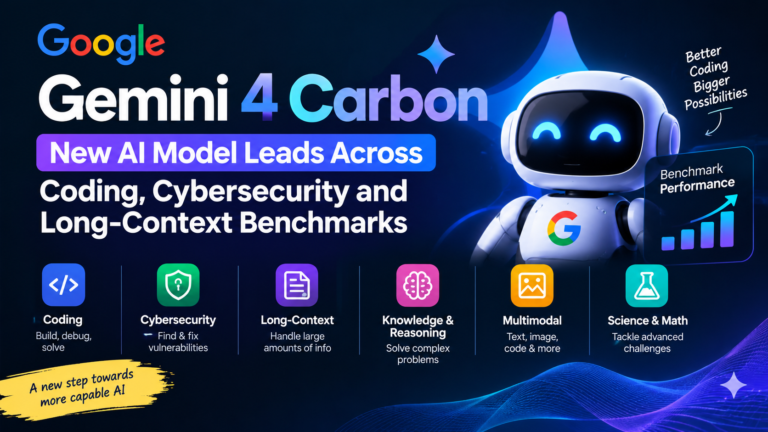
Google Gemini 4 Carbon: New AI Model Leads Across Coding, Cybersecurity and Long-Context Benchmarks
Google Gemini 4 Carbon: New AI Model Leads Across Coding, Cybersecurity and Long-Context Benchmarks Google Gemini 4 Carbon is making headlines in the…

Microsoft’s Biggest Exit Offer Ever: 60,000 Employees, Including India
Microsoft has introduced a Voluntary Exit Offer (VEO) that could cover approximately 60,000 employees across the United States, India, the United Kingdom and…

Freshers Read This: IIT Madras Study Says AI Could Shrink Your First Job Options
Every year, lakhs of students in India finish college with one hope: a first job that lets them learn, grow and move up.…