India Is Now Among the World Bank's Top 10 in AI Readiness
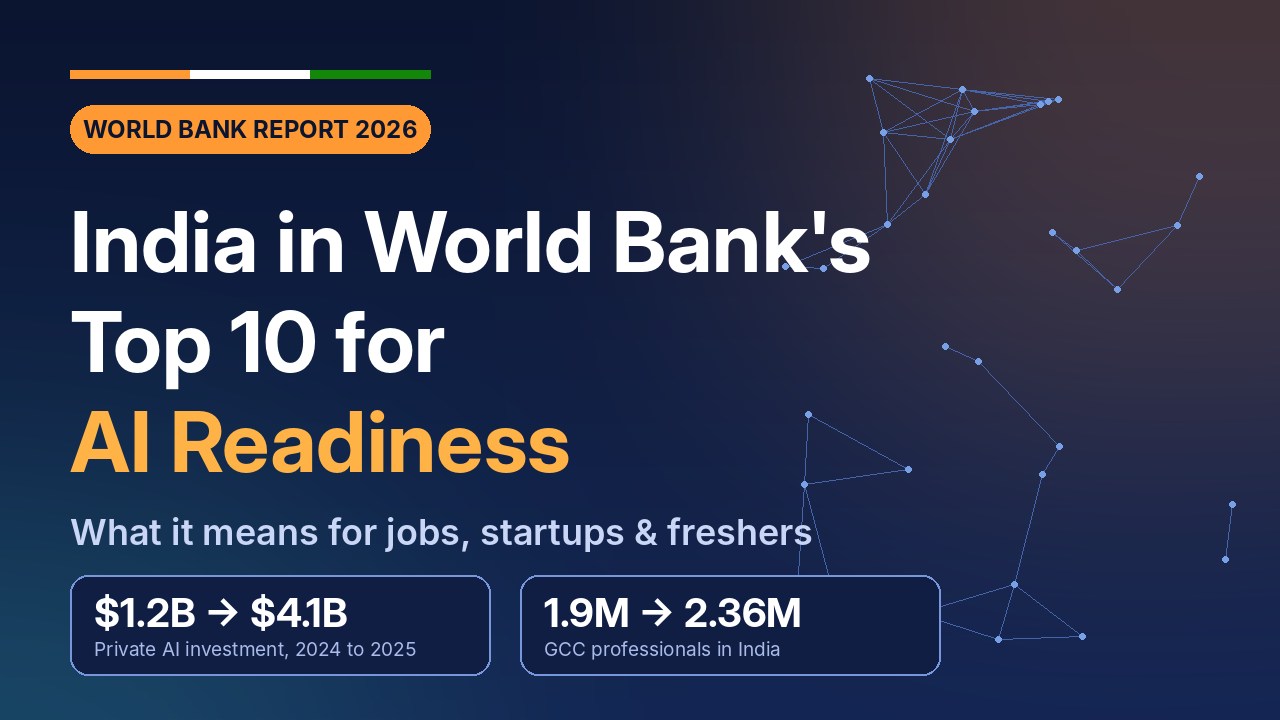
India has been named one of the top 10 emerging-market performers in AI readiness by the World Bank. The finding appears in a report released on 6 October 2026 called India and Artificial Intelligence: Seizing the Development Opportunity.
Rankings often sound like big headlines with little behind them. This one has real numbers, so let's look at them.
Why is India on this list?
The World Bank points to three things working in India's favour:
- A huge pool of technical talent. India produces engineers and developers in large numbers.
- An IT industry that already works with the world. Indian companies have spent decades serving global clients.
- Digital public infrastructure. Systems for identity, payments, and services reach crores of people.
AI needs skilled people, strong digital systems, and businesses ready to use it. India already has a good base in all three.
The money is moving in
Private investment in AI in India grew from about $1.2 billion in 2024 to about $4.1 billion in 2025, which is more than triple in a single year. That's roughly ₹36,000 crore flowing into the country's AI space.
Jobs are growing too. People working in Global Capability Centres (GCCs), the offices where global companies run tech, analytics, and finance work from India, rose from 1.9 million to 2.36 million in a year. That's close to half a million more people in one year.
The reality check
The report isn't all celebration:
- Adoption is still low. Only around 23% of Indian firms use any form of AI. In the US it's about 43%, and the gap is bigger for advanced uses.
- Nobody knows the long-term impact yet. The World Bank openly says the effect of AI on jobs and the wider economy is still uncertain.
- Small businesses are being left behind. The report says they face real barriers to using AI.
Being ready isn't the same as being there. India has the foundation, but most businesses haven't built on it yet.
What the World Bank wants India to do
The recommendations are fairly simple:
- Build better infrastructure to support AI.
- Make it easier for businesses to operate and adopt new technology.
- Widen access so AI isn't limited to big companies and big cities.
- Train the workforce so people can use AI instead of being replaced by it.
- Create clear rules on data security and privacy, so businesses know where they stand.
Why "small AI" matters
The World Bank Group is backing what it calls "small AI" through a programme called AgriConnect. These are focused, locally adapted tools that work in low-resource settings, like a farmer getting useful advice on a basic phone. For South Asia, the report says the biggest gains will likely come from adapting existing AI to local needs, not from building the biggest models.
What this means for freshers and job seekers
If you're early in your career, this report is good news, with a condition. AI-linked jobs and investment are growing, but the benefit goes to people who build relevant skills. Learning how to use AI tools in your own field, whether that's marketing, finance, operations, or coding, will matter more than any ranking.
The bottom line
Being in the top 10 shows India has the right ingredients. Whether it turns into jobs, growth and better public services depends on how fast businesses adopt AI and how well people are trained for it.
More for your curious side.
Google Gemini 4 Carbon: New AI Model Leads Across Coding, Cybersecurity and Long-Context Benchmarks
Google Gemini 4 Carbon: New AI Model Leads Across Coding, Cybersecurity and Long-Context Benchmarks Google Gemini 4 Carbon is making headlines in the…

Microsoft’s Biggest Exit Offer Ever: 60,000 Employees, Including India
Microsoft has introduced a Voluntary Exit Offer (VEO) that could cover approximately 60,000 employees across the United States, India, the United Kingdom and…

Freshers Read This: IIT Madras Study Says AI Could Shrink Your First Job Options
Every year, lakhs of students in India finish college with one hope: a first job that lets them learn, grow and move up.…